
How to Arrange Garden Flowers: Simple, Beautiful Arrangements Anyone Can Make
Introduction
Arranging flowers from your garden is one of the simplest ways to bring beauty indoors. It’s not about perfection—it’s about creating something that feels natural, relaxed, and reflective of the season.
With just a few stems and a thoughtful approach, anyone can create an arrangement that feels elevated and effortless.
Whether you’re working with a handful of zinnias or a full basket of blooms, this guide will help you arrange garden flowers that feel both relaxed and refined.

The Beauty of Garden-Style Arranging
Unlike traditional, tightly structured bouquets, garden-style arrangements embrace:
- Movement and texture
- Airiness
- Organic shapes and asymmetrical arrangements
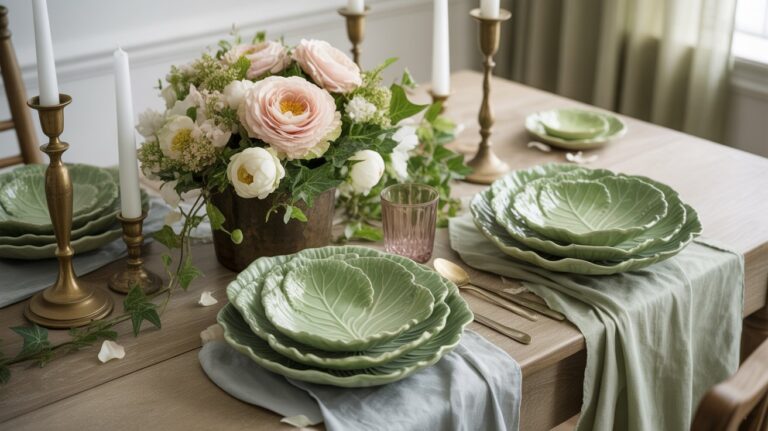
They feel as though they were gathered and placed—rather than perfectly designed. These arrangements are ideal for bedside tables, casual dining tablescapes, kitchen islands, and front entryways.
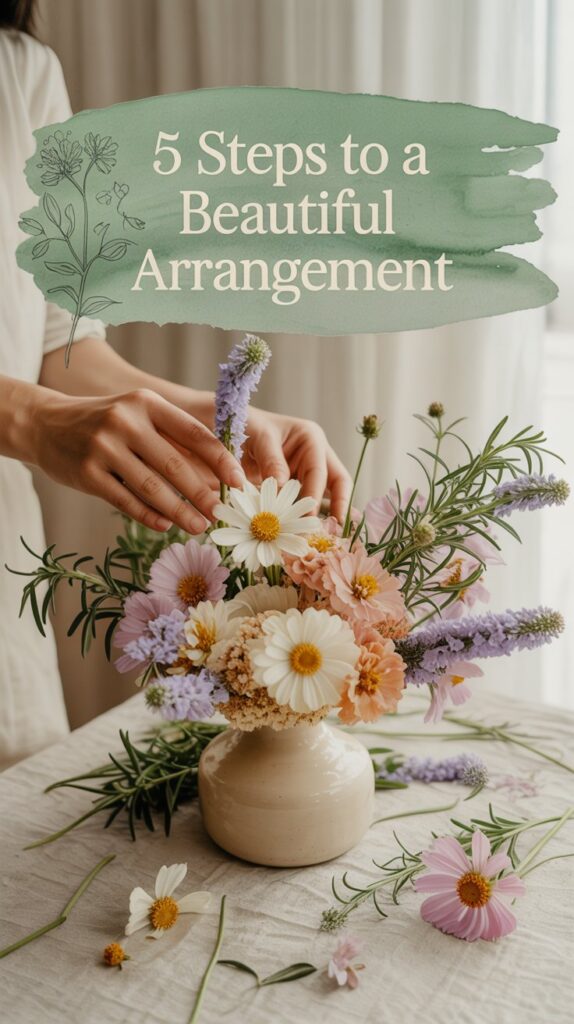
The Simple 5-Step Arrangement Formula
A beautiful arrangement can be broken down into a few easy steps:
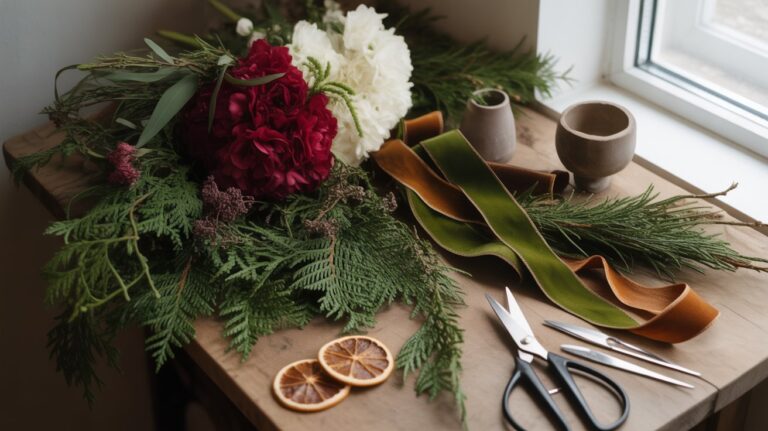
1. Start with Greenery
Create a loose base to define the shape.
2. Add Focal Flowers
These are your largest or most eye-catching blooms. Large blooms like dahlias or sunflowers (even hydrangea) anchor the design.
3. Layer in Secondary Flowers
Add depth and variation with zinnias, cosmos, and smaller blooms.
4. Fill with Airy Elements
Think wispy stems, smaller blooms, or herbs.
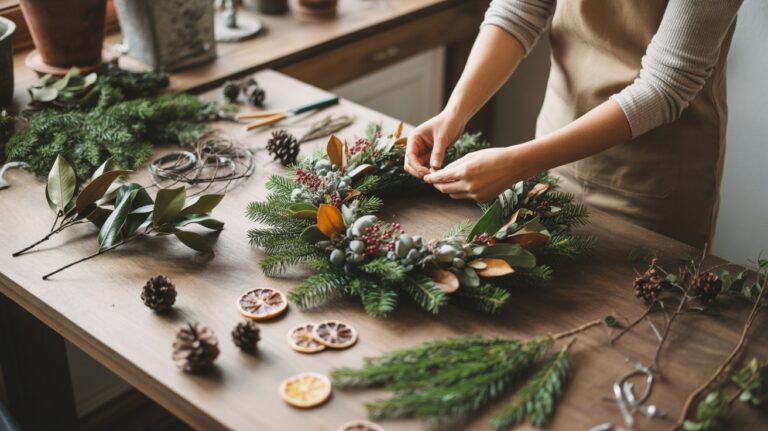
5. Refine and Adjust
Turn the vase as you go, refining the shape.

How to Create That Loose, Airy Look
The secret lies in restraint.
- Don’t overcrowd stems
- Vary heights and angles
- Let some flowers sit lower, others reach outward
- Embrace asymmetry
This creates movement and a more natural feel.
Beginner-Friendly Flower Combinations
If you’re unsure what looks good together, start here:
Soft & Romantic:
- White cosmos
- Blush zinnias
- Light greenery like basil
Bright Summer Mix:
- Hot pink zinnias
- Orange cosmos
- Yellow rudbeckia
Simple & Elegant:
- All-white flowers
- Greenery only
- Minimal, sculptural stems
Everything All At Once:
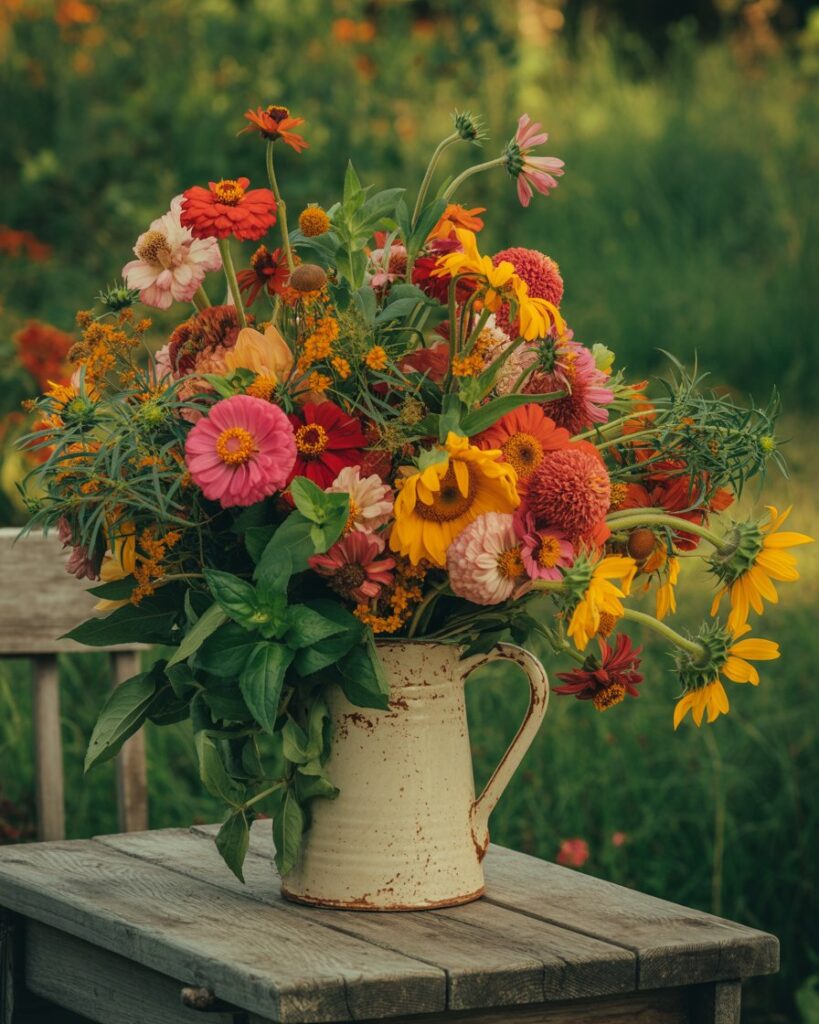
- A rustic basket filled with all the flowers in your garden!
Limiting your palette often creates the most polished look.



Greenery That Elevates Any Arrangement
Don’t skip this—it’s what makes arrangements feel complete.
Use:
- Basil for softness
- Mint for fullness
- Rosemary for structure
- Olive branches (if available)
- Ferns or grasses for movement
A simple mix of greenery can transform basic flowers into something special.

Choosing the Right Vase
The vessel shapes the arrangement. Tools like florist foam, a metal frog, or even chicken wire molded to fit your vessel will help support stems and shape your arrangement.
- Wide, low bowls: relaxed and full
- Narrow vases: upright and simple
- Ceramic vessels: soft and organic
- Glass vases: light and minimal
Even a simple pitcher can become a beautiful centerpiece.

Common Mistakes to Avoid
- Overfilling the vase
- Keeping all stems the same height
- Skipping greenery
- Making the arrangement too symmetrical
A little looseness goes a long way.
Styling Flowers Throughout Your Home
Flowers don’t need to live only on the dining table.
Try placing small arrangements:
- On a bedside table
- In the kitchen
- Near an entryway
- In a powder room
A few stems can completely shift the feel of a space.
From Garden to Arrangement
If you’re growing your own flowers, arranging becomes even more meaningful.
Freshly cut blooms have a natural movement and variation that store-bought flowers often lack.
How to Start a Cut Flower Garden in the South
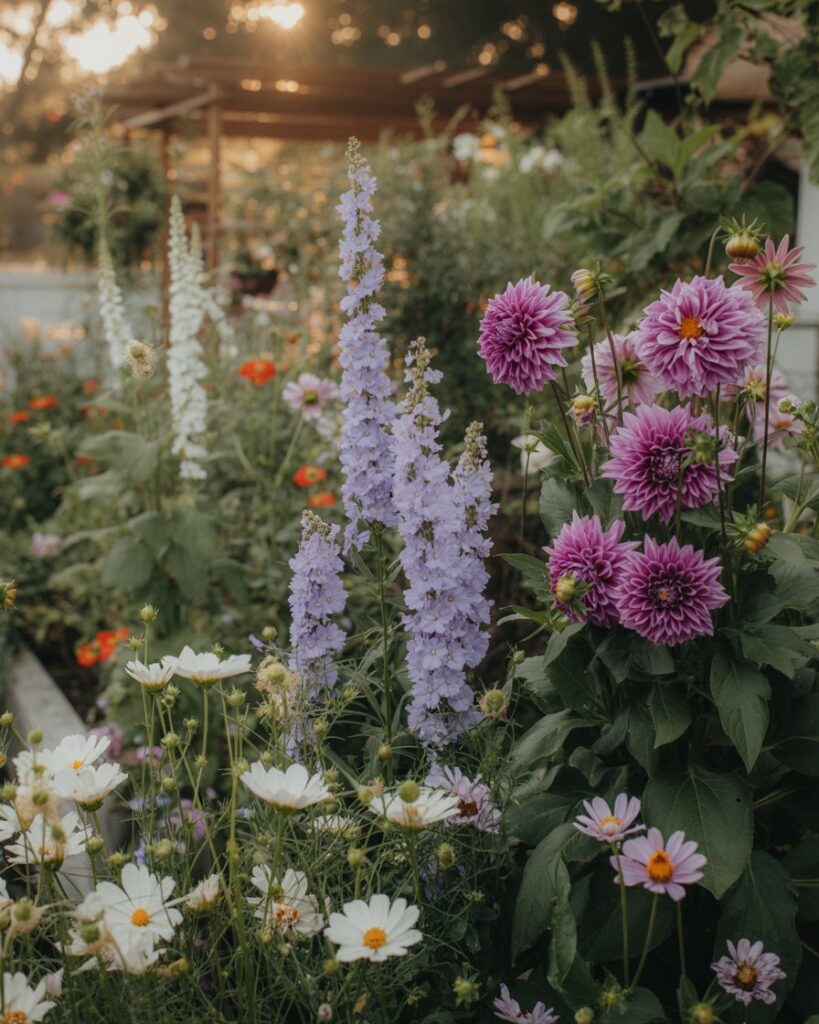
A Note on Imperfection
Some of the most beautiful arrangements feel slightly undone.
A bent stem, an unexpected angle, a bit of asymmetry—these are the details that make an arrangement feel alive.

Final Thoughts
Arranging flowers is less about following rules and more about creating something that feels right in your space.
Start with what you have. Keep it simple. And let each arrangement reflect the quiet beauty of the garden it came from.