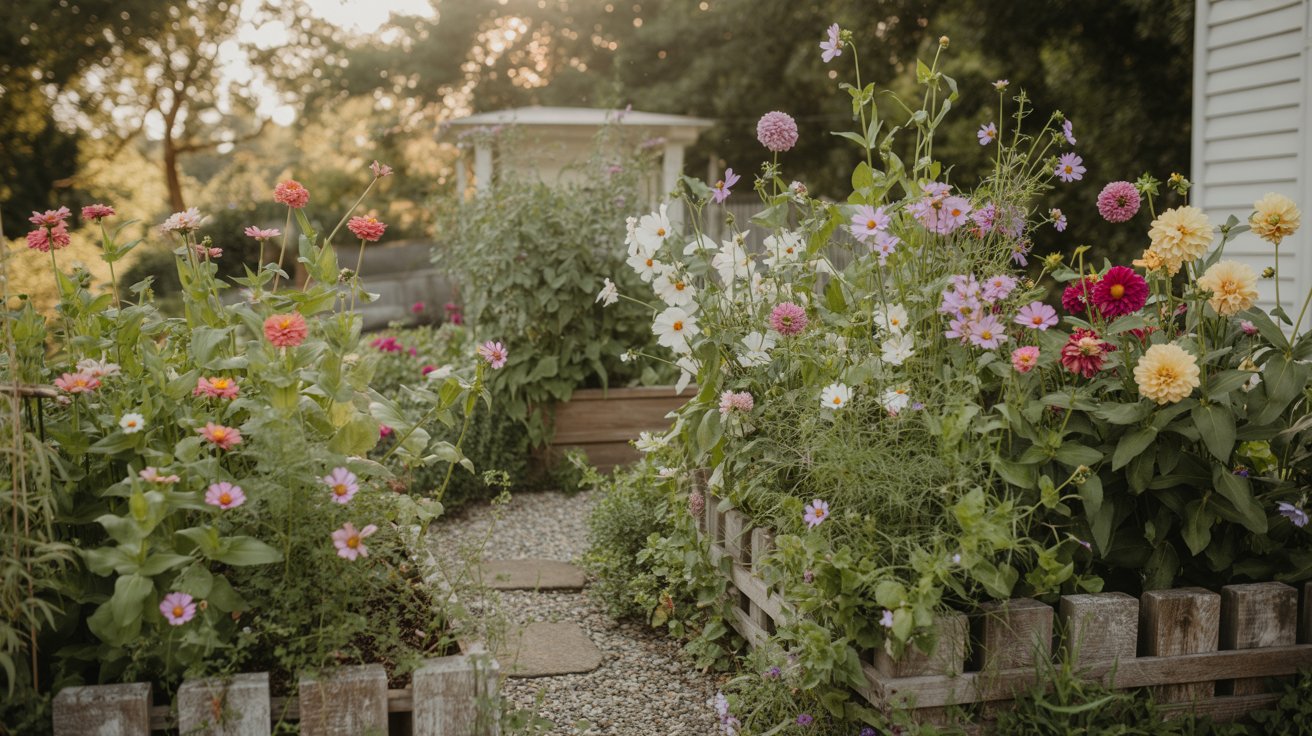
How to Start a Cut Flower Garden in the South (Beginner’s Guide)
Introduction
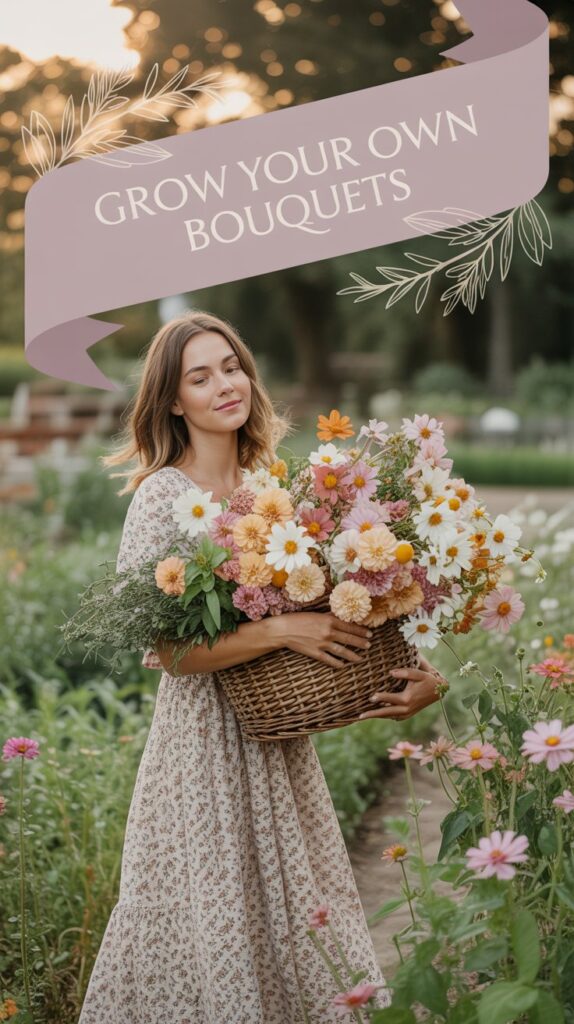
There’s something undeniably charming about stepping into your garden, clipping a handful of sun-warmed blooms, and bringing them inside to brighten your home. A cut flower garden isn’t just about growing flowers—it’s about creating a rhythm: planting, tending, harvesting, and enjoying.
In the South, where long growing seasons and abundant sunshine work in your favor, starting a cut flower garden is both rewarding and surprisingly achievable—even for beginners.
This guide will walk you through everything you need to know to grow your own beautiful, bouquet-ready blooms.
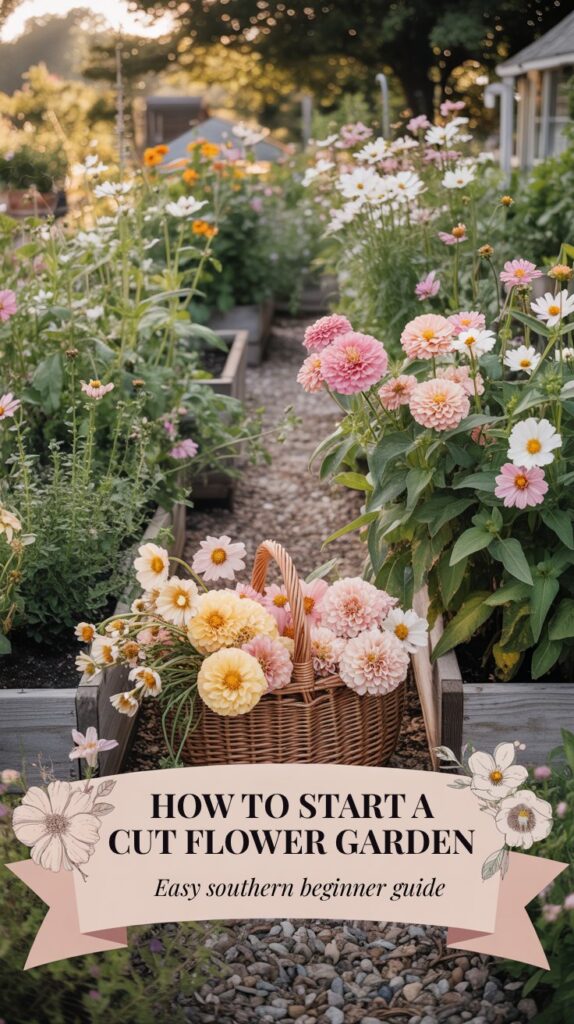
What Is a Cut Flower Garden?
A cut flower garden is designed specifically for harvesting. Unlike traditional ornamental beds, these flowers are meant to be cut regularly, encouraging even more blooms throughout the season.
The goal isn’t perfection—it’s abundance.
Think:
- Armfuls of zinnias
- Buckets of cosmos
- Bold, late-summer dahlias
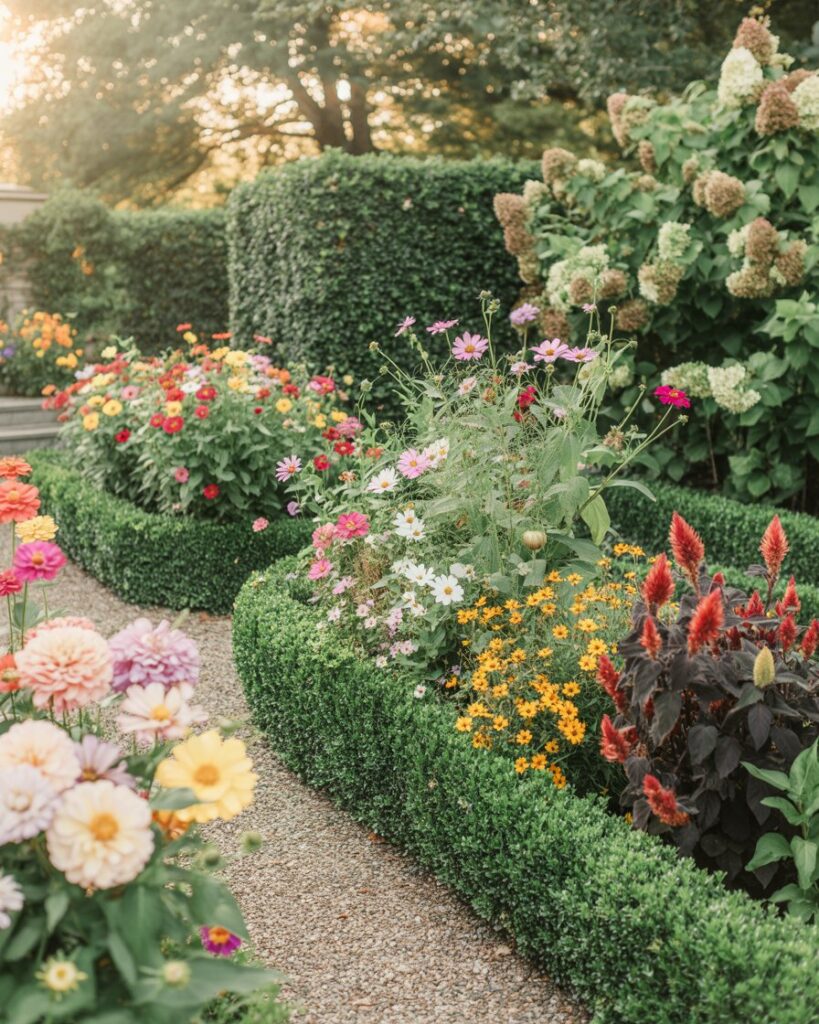
Why Cut Flower Gardens Thrive in the South
Southern gardens have a distinct advantage:
- Long growing seasons (often March through October)
- Heat-loving flowers that thrive in warm temperatures
- Multiple planting windows for continuous blooms
With the right flower choices, you can enjoy continuous blooms from late spring well into fall.
The Best Beginner Flowers for Cutting
Start with reliable, easy-to-grow varieties that love Southern heat:
Spring to Early Summer:
- Cosmos (light, airy, romantic)
- Coreopsis (cheerful and bright)
- Bachelor’s buttons (soft blue tones)
Summer Stars:
- Zinnias (colorful, long-lasting, easy)
- Sunflowers (bold focal blooms)
- Celosia (adds texture and interest)
Late Summer to Fall:
- Dahlias (dramatic and abundant)
- Rudbeckia (warm, golden tones)
- Amaranth (trailing or upright texture)
These varieties grow quickly, produce abundantly, and hold up beautifully in arrangements.
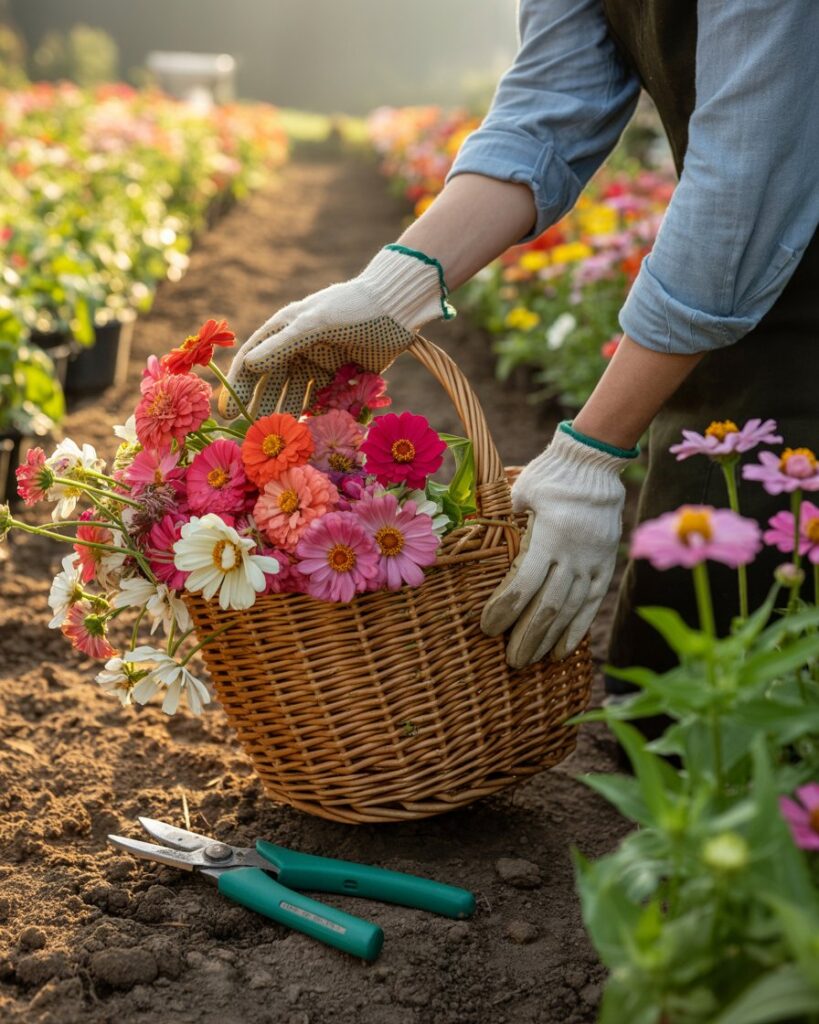
How to Plan a Simple, Beautiful Cut Flower Garden Layout
You don’t need a large space. A small, sunny area is enough to get started. Even a 4×8 bed can produce armfuls of flowers.
Key basics:
- Sunlight: 6–8 hours daily
- Soil: Well-draining, enriched with compost
- Layout: Plant in rows or loose clusters for easy cutting
- Group flowers by type for visual impact
- Leave space to walk between rows
A simple grid layout works beautifully and keeps things manageable. Follow instructions on seed packets to determine how deep or shallow to plant your seeds.
Beginner-Friendly Color Combinations
If you’re unsure where to start, try planting in simple palettes:
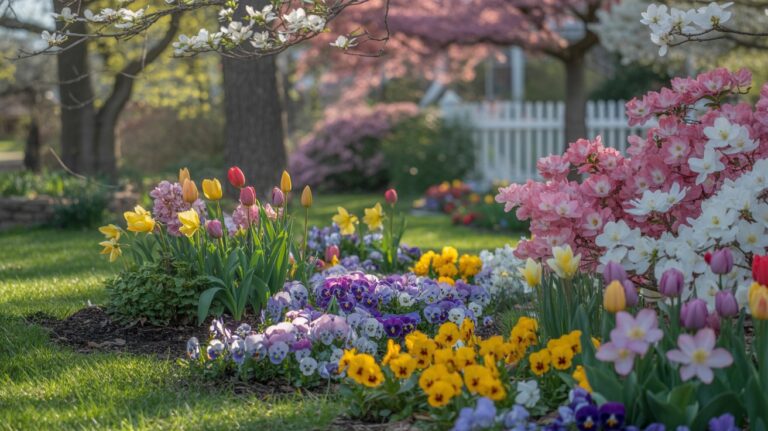
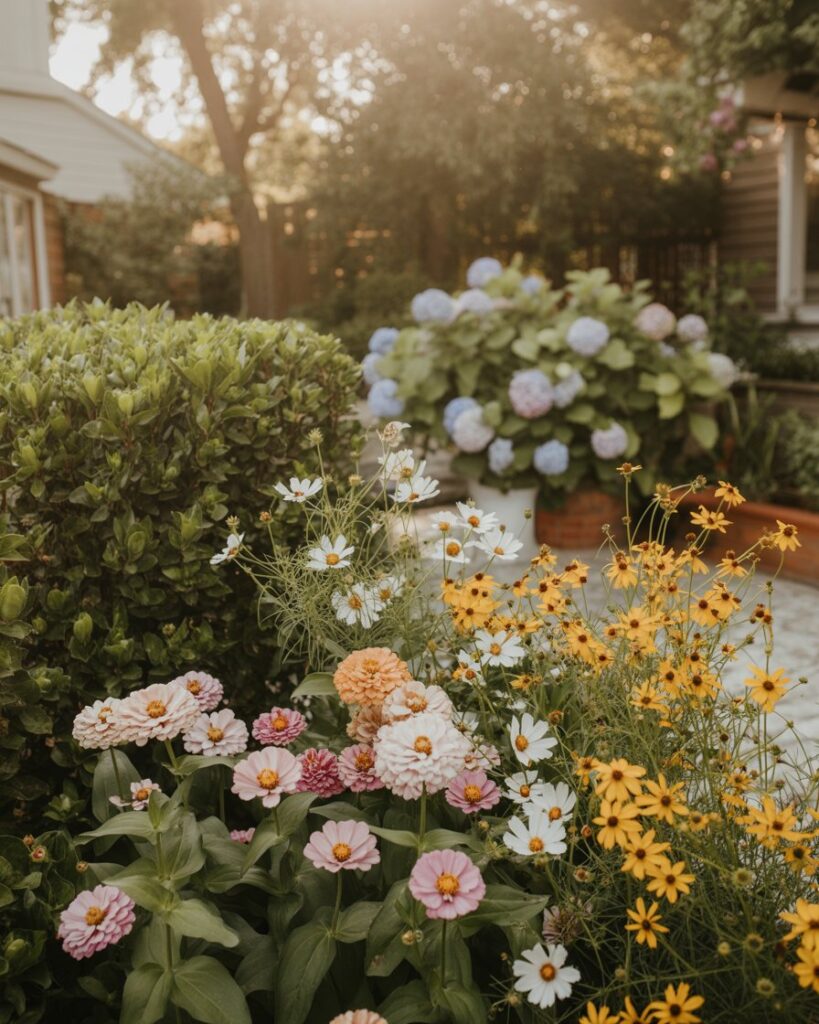
- Soft & Romantic: blush zinnias, white cosmos, pale yellow coreopsis
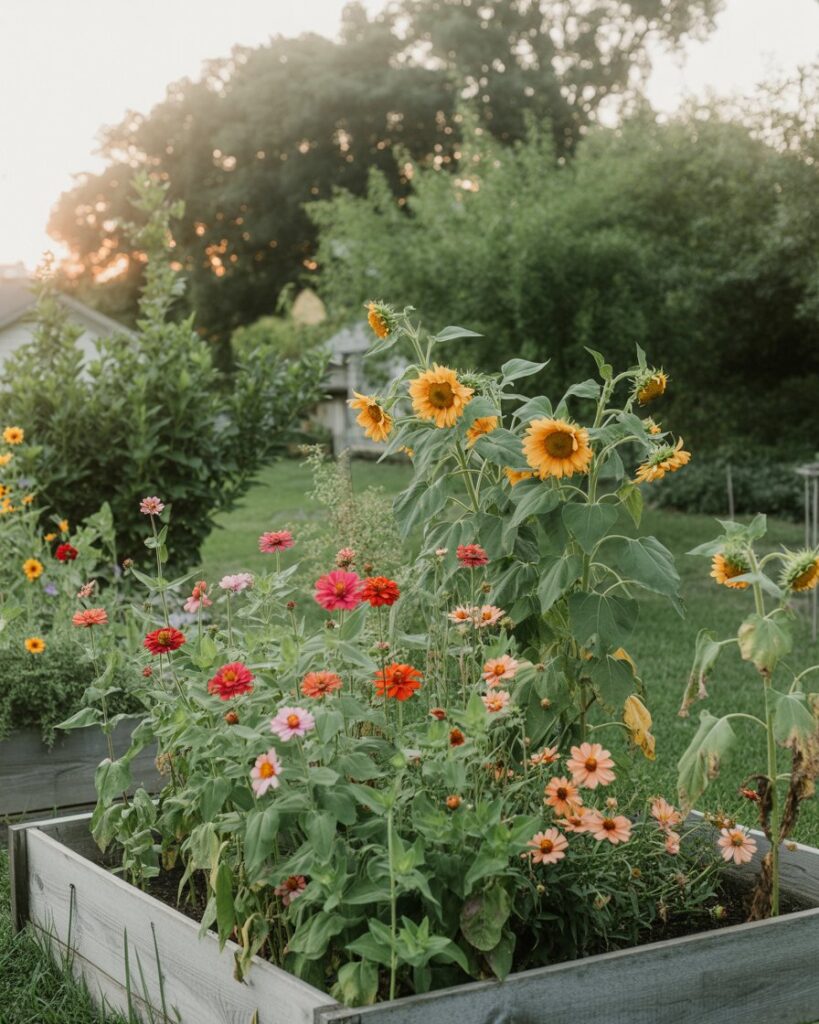
- Bold Summer: red zinnias, orange cosmos, golden sunflowers
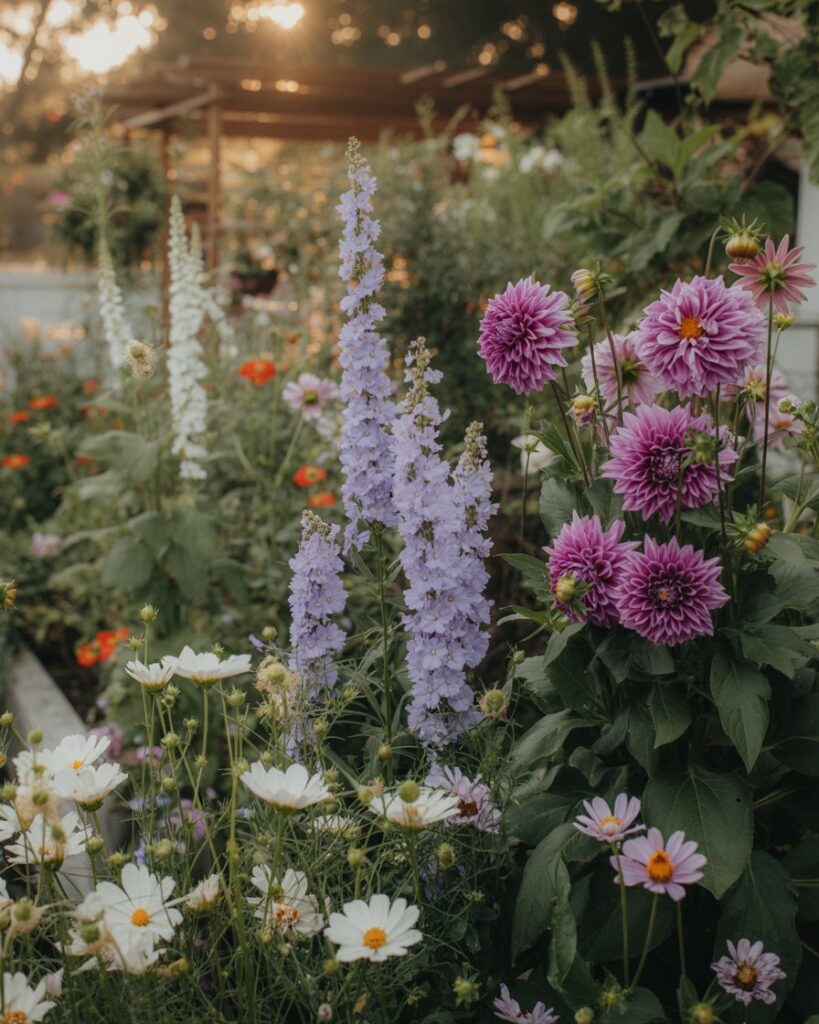
- Cool & Calm: lavender & purple dahlias, lavender larkspur, white cosmos & zinnias
Planting with combinations in mind makes arranging later effortless.
When to Plant in the South
Timing matters—but the South gives you flexibility. Take advantage of the long growing season for months of colorful blooms.
- Early Spring: Start hardy annuals
- After Last Frost: Plant heat-loving flowers
- Early Summer: Succession plant for continuous blooms (the secret to flowers summer through fall)
How to Cut Flowers for Continuous Blooms
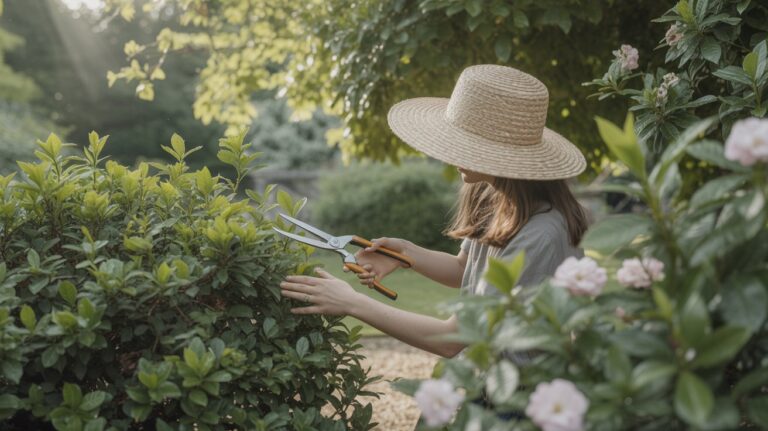
Harvesting actually encourages more flowers. Cutting at the right spot above a leaf node produces even more blooms on the plant. Don’t forget to clean your shears regularly to avoid transferring disease to the plant.
Best practices:
- Cut in the early morning
- Use clean, sharp shears
- Cut just above a leaf node
- Harvest often
The more you cut, the more your plants produce.
Keeping Flowers Fresh After Cutting
With a few easy steps, you can extend the life of your cut flowers for weeks. To extend vase life:
- Place stems in water immediately
- Remove lower leaves. Don’t leave any leaves below the water level.
- Change water every 1–2 days
- Re-cut stems at an angle
Simple habits make a noticeable difference.
What to Do With Your Flowers Next
Once you’ve grown your own blooms, the next step is bringing them indoors in a way that feels natural and beautiful.
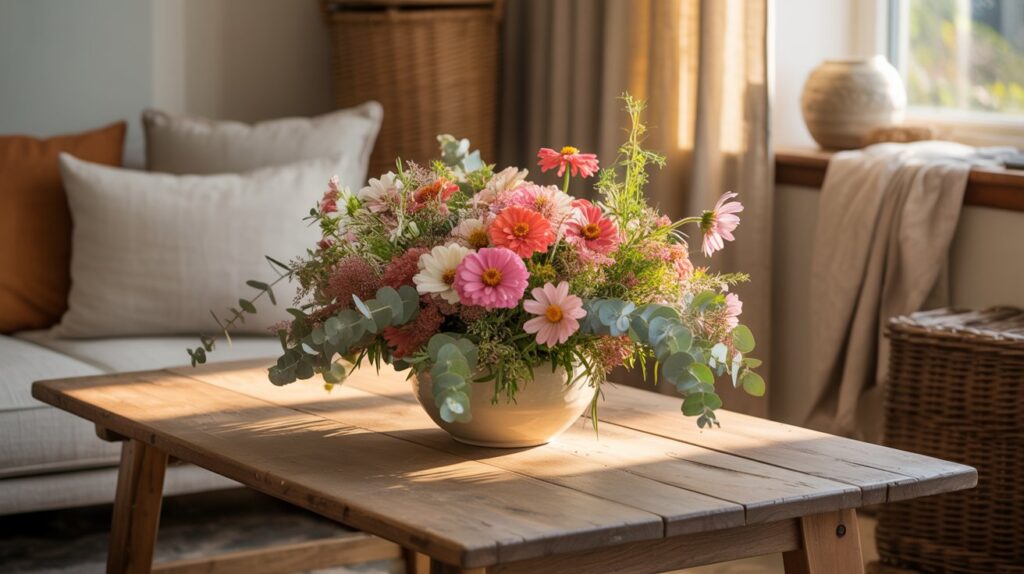
From loose, airy arrangements to simple countertop styling, arranging flowers is where your garden truly comes to life. Show off your success in the garden with beautiful compositions to brighten any room in the house. They also make great gifts for neighbors and friends.
How to Arrange Garden Flowers: Simple, Beautiful Arrangements Anyone Can Make
Final Thoughts
A cut flower garden invites you to slow down and notice the small moments—the early morning light, the scent of fresh blooms, the quiet ritual of gathering something you’ve grown yourself.
Start small. Plant what you love. And let your garden become something you not only admire—but bring inside and enjoy every day.