How to Plant a Shrub the Right Way – Beginners’ Guide
Planting a shrub seems simple: dig a hole, drop it in, cover it up, water, done.
But here’s the truth: most shrubs that struggle in the first year aren’t suffering from bad soil or bad luck. They were planted incorrectly.
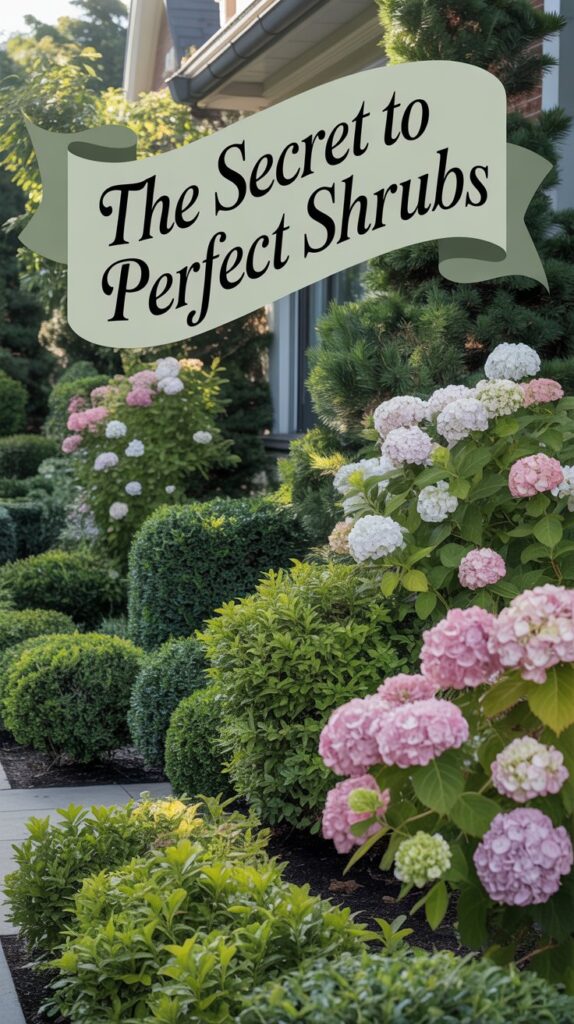
Whether you’re adding structure with Hydrangea, evergreen backbone with Buxus, or soft seasonal color with Spiraea, proper planting makes the difference between a thriving garden and a replacement project next spring.
Let’s do this the right way.
Why Proper Shrub Planting Matters
Shrubs are long-term investments. Unlike annual flowers, they don’t just give you one season — they define your foundation beds, walkways, and garden rooms for years.
When planted incorrectly, shrubs often:
- Sit too deep and slowly suffocate
- Develop circling roots that never establish properly
- Rot from poor drainage
- Struggle through summer heat stress
The good news? Avoiding these problems is surprisingly simple.
Step 1: Choose the Right Location
Before digging, check:
- Sun exposure (full sun, part sun, shade)
- Mature size (don’t plant a 6-foot shrub in a 3-foot space)
- Drainage (shrubs hate soggy soil more than almost anything)
In the South especially, drainage matters more than soil richness. Heavy clay isn’t a deal breaker — but standing water is.
Step 2: Dig the Hole — Wider, Not Deeper
This is where most people go wrong.
The hole should be:
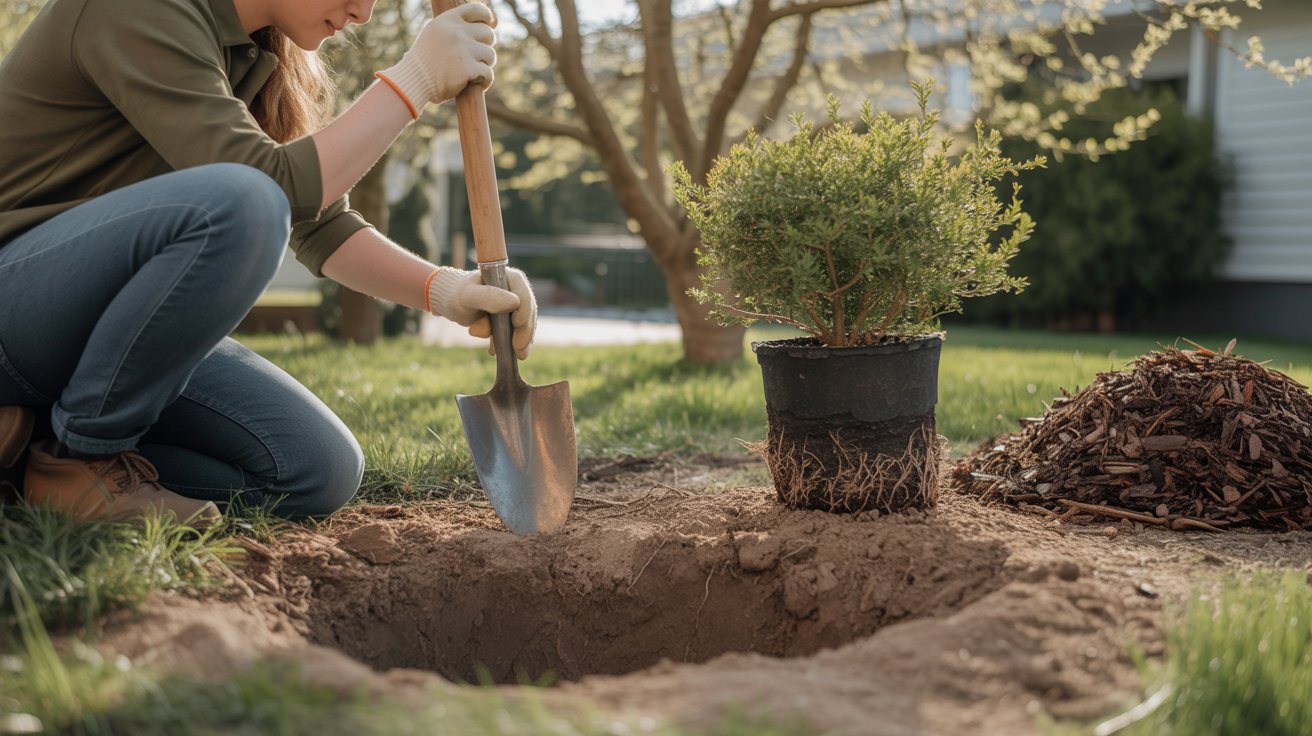
- 2–3 times wider than the root ball
- No deeper than the root ball itself
Planting too deep is the #1 shrub killer.
When the shrub is placed in the hole, the top of the root ball should sit:
- Level with the soil
- Or slightly above (½–1 inch higher in clay soil)
If it sinks after watering, it was planted too deep.
Step 3: Loosen the Roots (Yes, Even If It Feels Wrong)
Container-grown shrubs often have tightly circling roots.
Before planting:
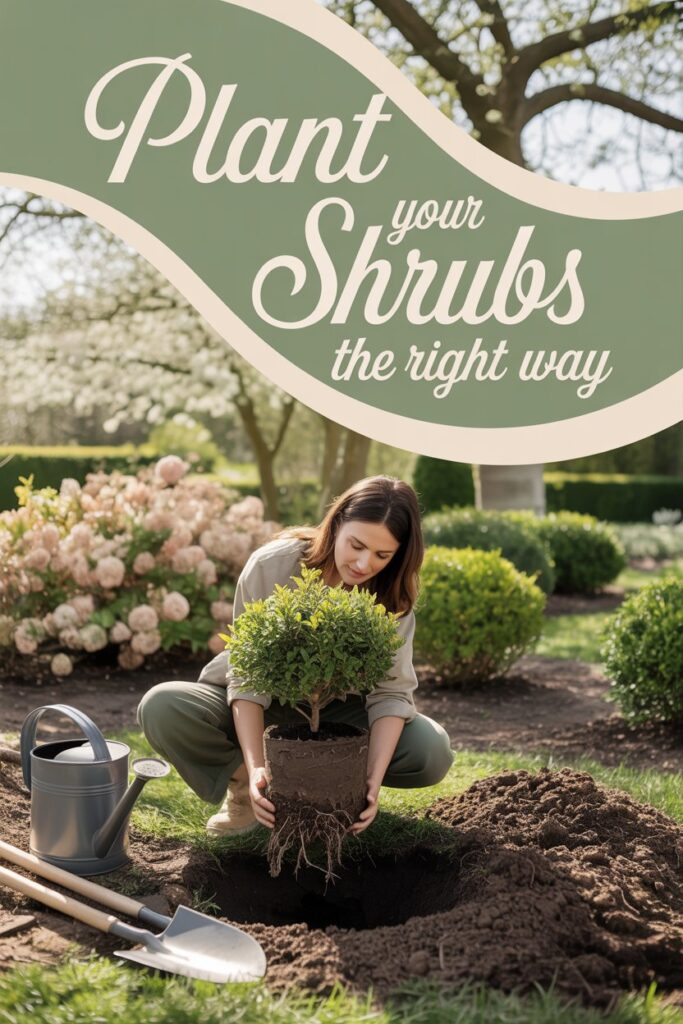
- Gently remove from pot
- Tease apart outer roots with fingers
- If severely root-bound, make 3–4 vertical slices around the root ball
This encourages roots to grow outward instead of continuing to circle.
It may look aggressive. It isn’t. It’s necessary.
Step 4: Backfill With Native Soil (Skip the Fancy Amendments)
Another common mistake: replacing the hole soil with premium garden mix.
This creates a “bathtub effect” where roots stay confined to the amended soil instead of expanding outward.
Instead:
- Backfill with the soil you removed
- Break up large clay chunks
- Remove rocks and debris
If improving soil, amend the entire bed — not just the hole.
Step 5: Water Deeply and Slowly
After planting:
- Water thoroughly to eliminate air pockets
- Let it soak in
- Water again
Shrubs need consistent moisture during the first growing season while roots establish.
In spring, that usually means watering:
- 1–2 times per week (depending on rainfall)
- Deep soakings, not daily sprinkles
Step 6: Mulch Correctly (Not a Volcano)
Mulch helps retain moisture and regulate soil temperature.
But never pile mulch against the trunk.
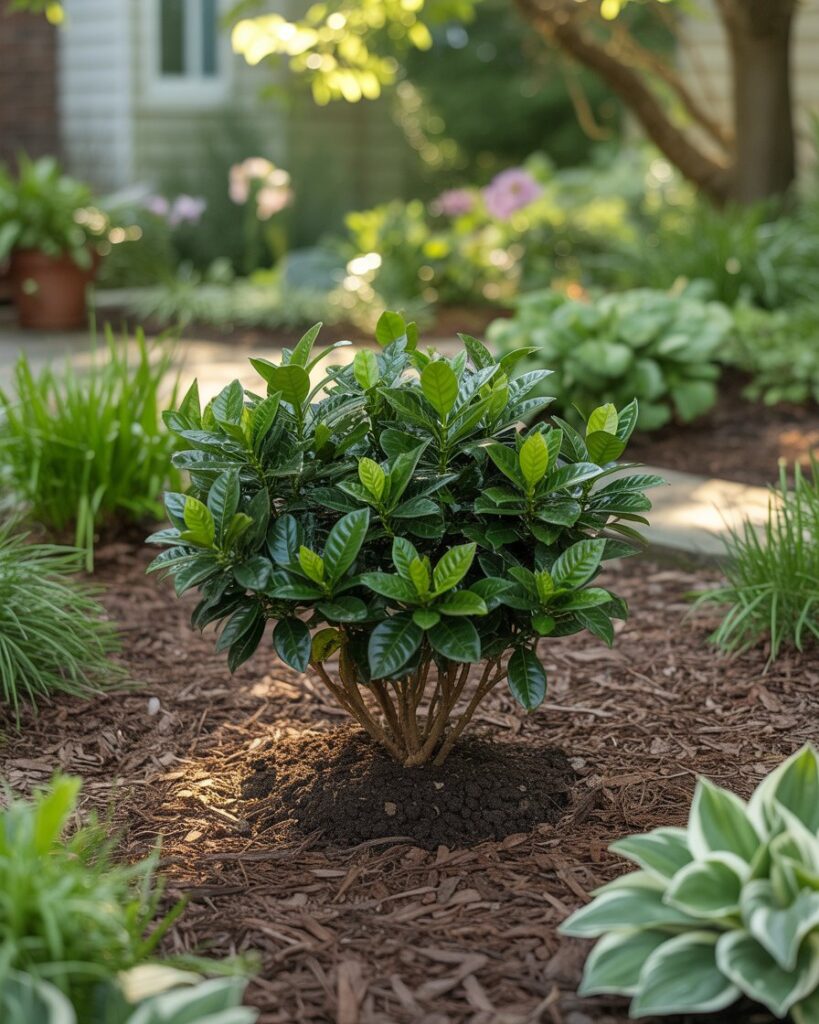
Correct mulching:
- 2–3 inches deep
- Spread wide in a ring
- Keep 2–3 inches away from stems
Mulch volcanoes cause rot and pest issues.
Common Shrub Planting Mistakes
Let’s recap what to avoid:
- Planting too deep
- Digging a narrow hole
- Skipping root loosening
- Over-amending only the hole
- Overwatering daily instead of deep soaking
- Piling mulch against stems
If your shrubs have struggled in the past, one of these is usually the culprit.
Best Time to Plant Shrubs
Spring and fall are ideal because:
- Temperatures are mild
- Rainfall is more consistent
- Plants establish roots before extreme heat or cold
In warmer climates, early spring gives shrubs time to root before summer stress.
Bonus Tip: Don’t Fertilize Immediately
Freshly planted shrubs need root establishment, not top growth.
Wait:
- 6–8 weeks before applying fertilizer
- Or until you see new growth
Too much nitrogen early on can stress a newly planted shrub.
What to Expect the First Year
Even when planted correctly, shrubs follow a pattern:
Year 1: Sleep (root growth)
Year 2: Creep (moderate top growth)
Year 3: Leap (noticeable size increase)
Patience pays off.
Spring Shrubs That Shine When Planted Properly
If you’re building structure in your spring garden, consider:
- Hydrangea macrophylla for showy blooms
- Ilex vomitoria for evergreen structure
- Azalea indica for classic Southern color
- Loropetalum chinense for rich foliage contrast
Planted properly, these become long-term anchors in your landscape.
Final Thoughts
Most garden failures aren’t dramatic — they’re subtle.
A shrub planted two inches too deep might look fine for months before slowly declining. By the time it’s obvious, the damage is done.
Take the extra ten minutes at planting time.
Dig wider. Check depth. Loosen roots. Mulch correctly.
Your future garden will thank you.