When and How to Divide Hostas
A simple guide to fuller beds, healthier plants, and more shade garden magic
Please note: This website contains affiliate links. As an Amazon Associate, we earn from qualifying purchases at no additional cost to you.
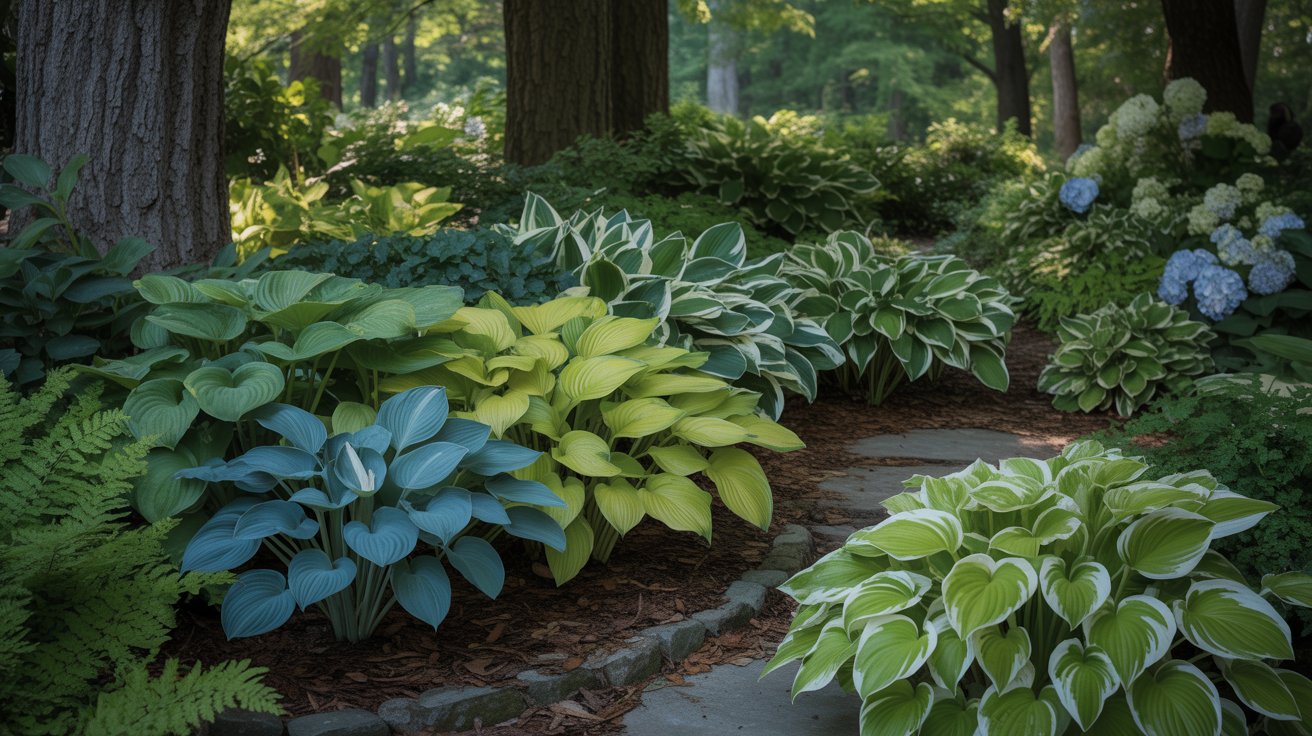
Hostas are the quiet heroes of the shade garden. They unfurl in spring like green bouquets, fill awkward spaces with effortless elegance, and return year after year with dependable beauty.
But even the most graceful garden staple occasionally needs a little division.
Whether your hostas are crowding their neighbors, developing a bare center, or simply begging to be shared with a friend, dividing them is one of the easiest ways to refresh your beds — and multiply your plants for free.
Let’s walk through when and how to divide hostas, step by step.
Why Divide Hostas?
Hostas don’t require frequent dividing, but every 3–5 years they benefit from it. Division helps:
- Rejuvenate older clumps
- Prevent overcrowding
- Improve air circulation
- Encourage fuller growth
- Create new plants for other areas of your garden
If the center of your plant looks sparse or growth seems weaker than usual, that’s often your sign.
When to Divide Hostas
Timing matters — but thankfully, hostas are forgiving.
🌸 Early Spring (Best Option)
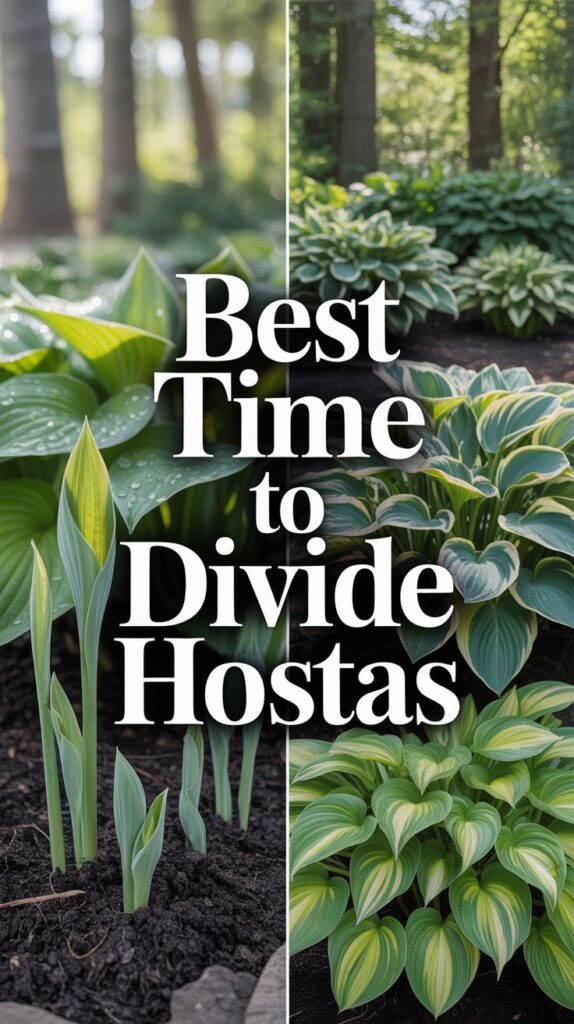
The ideal time to divide hostas is early spring, just as the pointed shoots (often called “hosta noses”) begin emerging from the soil.
At this stage:
- Leaves haven’t fully unfurled
- Roots are actively waking up
- The plant experiences minimal transplant shock
Spring division allows the plant to establish before summer heat arrives.
🍂 Early Fall (Second Best Option)
You can also divide hostas in early fall, about 4–6 weeks before your first frost.
This gives roots time to settle before winter dormancy. Avoid dividing too late in fall, as roots need time to establish before the ground freezes.
🚫 Avoid Mid-Summer
Dividing during peak summer heat can stress the plant and increase watering demands. If you must divide in summer, water consistently and provide temporary shade.
What You’ll Need
- Sharp spade or garden shovel
- Garden fork (optional)
- Clean, sharp knife or pruning saw (for large clumps)
- Compost or soil conditioner
- Watering can or hose
Sterilizing tools between plants helps prevent disease spread — especially in larger gardens.
Step-by-Step: How to Divide Hostas
1️⃣ Water the Plant First
Water thoroughly the day before dividing. Moist soil is easier to work with and reduces root damage.
2️⃣ Dig Around the Entire Clump
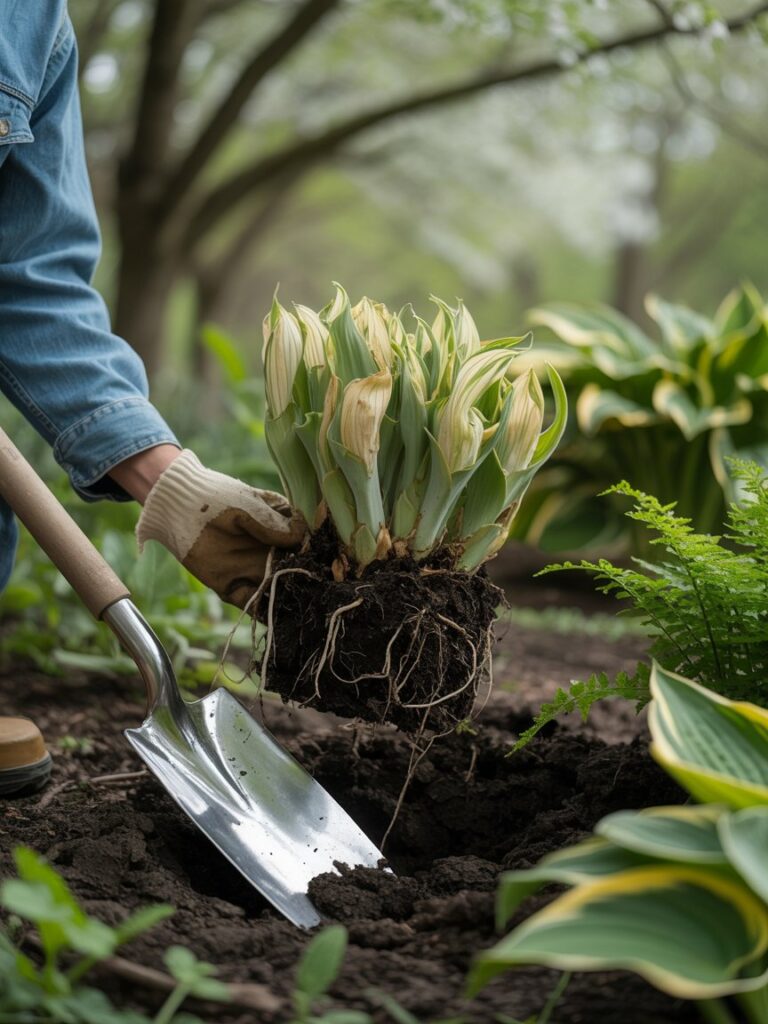
Insert your spade 6–8 inches from the crown and dig all the way around the plant. Lift the entire clump out of the ground.
For very large hostas, this may take some leverage — don’t worry, they’re tougher than they look.
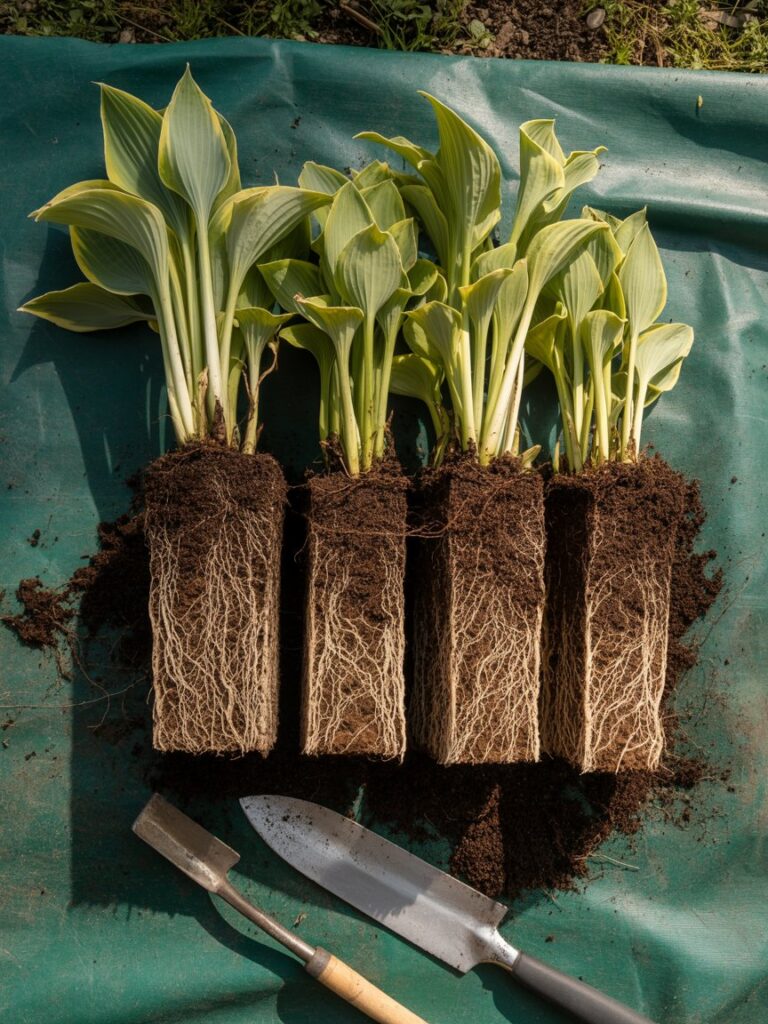
3️⃣ Separate the Clump
Shake or gently wash off excess soil so you can see the root structure.
- Small clumps can be pulled apart by hand.
- Larger clumps may need to be cut with a sharp knife or spade.
Each division should include:
- Several shoots (or eyes)
- A healthy portion of roots
Don’t worry about being overly delicate — hostas are resilient.
4️⃣ Replant Immediately
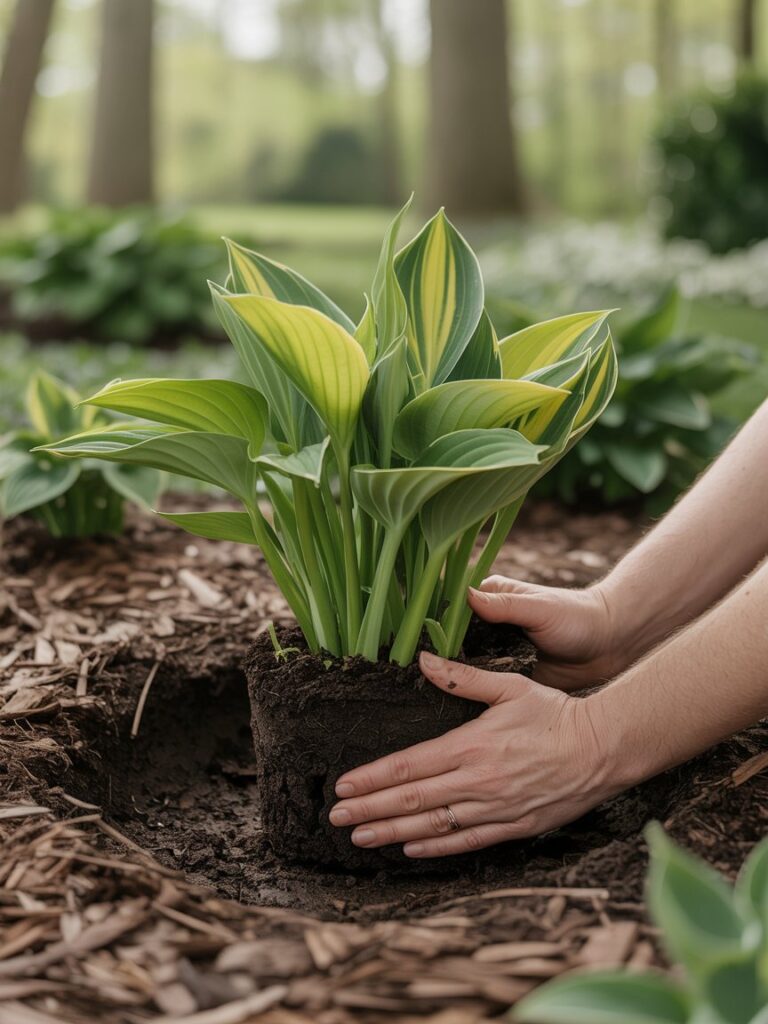
Replant divisions at the same depth they were originally growing. Amend soil with compost if needed.
Space them according to their mature size — hostas love room to spread.
Water thoroughly after planting.
Aftercare Tips
- Keep soil consistently moist (not soggy)
- Add a light layer of mulch to retain moisture
- Avoid heavy fertilizing immediately after division
- Expect some temporary drooping — they rebound quickly
Within a few weeks, your new divisions will settle in beautifully.
A Few Extra Charming Garden Tips
- Blue hostas prefer deeper shade to maintain their powdery color.
- Variegated varieties can tolerate a bit more morning sun.
- Large hostas can weigh 40+ pounds when mature — divide before they get unwieldy.
- Label your divisions if you’re moving multiple varieties.
Hostas may be humble, but they are the backbone of an elegant shade garden.
Final Thoughts
Dividing hostas isn’t complicated — it’s simply a way of giving your garden room to breathe.
A little early-spring effort rewards you with fuller beds, stronger plants, and the joy of sharing extras with neighbors. In a world where so much feels fleeting, there’s something deeply satisfying about multiplying beauty with your own hands.
And in the shade garden, hostas are always worth the effort.
Please note: This website contains affiliate links. As an Amazon Associate, we earn from qualifying purchases at no additional cost to you.