How to Refresh Overgrown Shrubs Without Killing Them
Gentle pruning strategies for a healthier, more beautiful garden
Overgrown shrubs happen to the best of us.
Maybe life got busy. Maybe that “quick trim” never happened. Maybe that sweet little shrub decided to live its best life and double in size overnight.
The good news? Most shrubs can be refreshed beautifully — without shocking or killing them — if you use the right approach.
Today we’re walking through the safe, garden-smart way to revive leggy, woody, or unruly shrubs so they come back fuller, healthier, and more balanced.
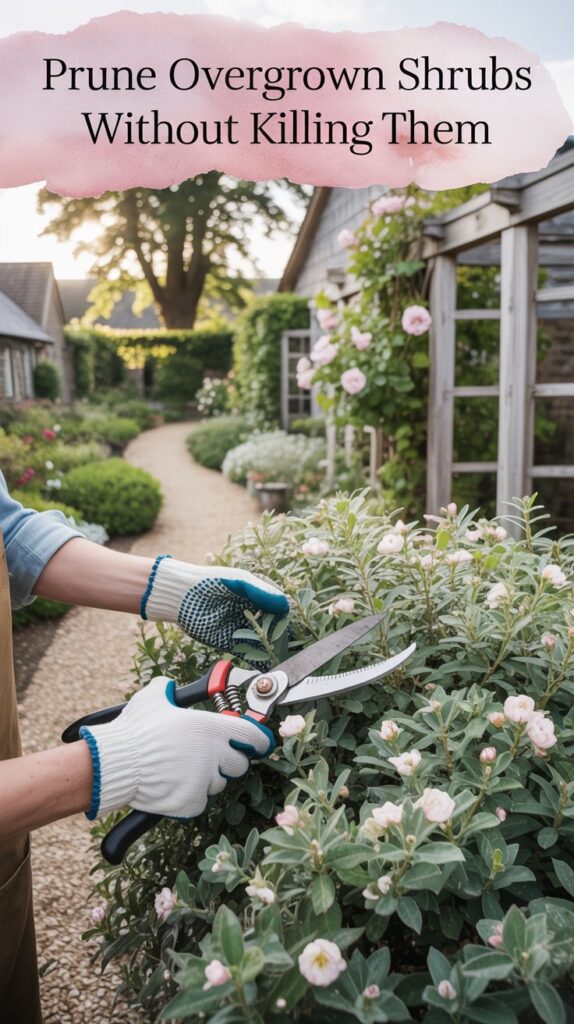
Step 1: Identify What Type of Shrub You Have
Before you cut a single branch, pause.
Different shrubs respond differently to pruning.
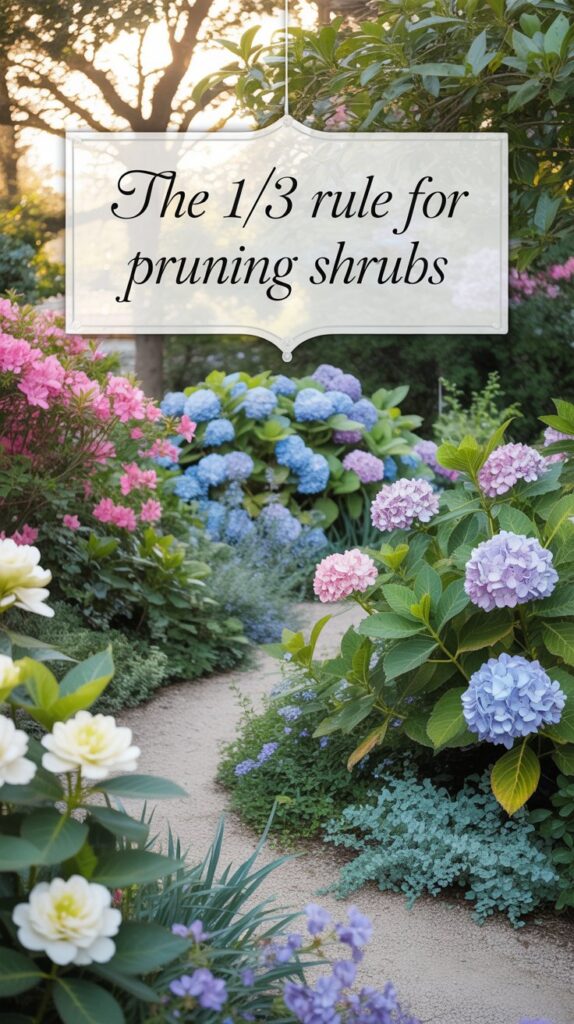
Spring-Flowering Shrubs
Examples: Hydrangea macrophylla, Forsythia, Azalea
These bloom on old wood (last year’s growth).
Prune immediately after flowering, not in fall or early spring — or you’ll remove next year’s blooms.
Summer-Flowering Shrubs
Examples: Hydrangea paniculata, Buddleja
These bloom on new wood.
Prune in late winter or early spring before new growth begins.
Evergreen Shrubs
Examples: Boxwood, Holly
Prune lightly in spring. Avoid cutting into old, leafless wood — many evergreens struggle to regrow from it.
Knowing your shrub type prevents accidental “why isn’t it blooming?” heartbreak.
Step 2: Start With the 1/3 Rule
If your shrub is seriously overgrown, resist the urge to chop it down dramatically.
Instead, use the 1/3 Renewal Method:
- Remove the oldest 1/3 of stems at the base.
- Cut them all the way to the ground.
- Leave the younger stems intact.
This:
- Opens up airflow
- Encourages fresh growth
- Reduces shock
- Maintains structure
Repeat the process over 2–3 seasons if needed.
This is the safest way to rejuvenate mature shrubs without killing them.
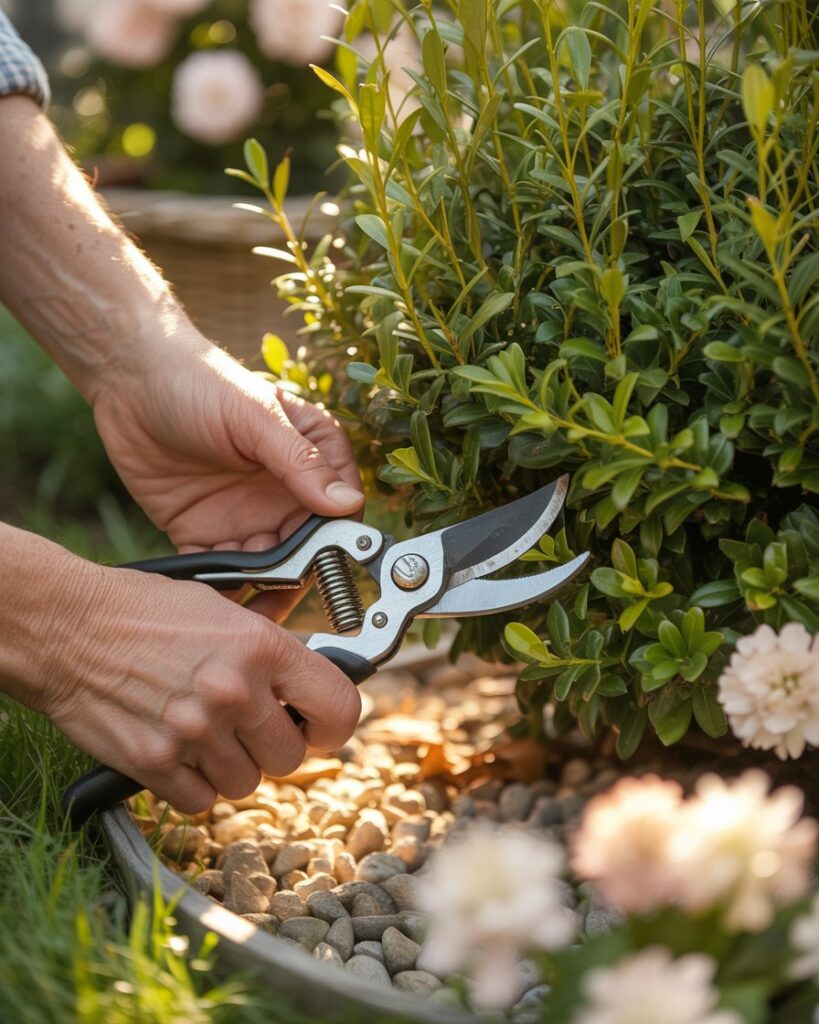
Step 3: Remove the “Three D’s”
Before shaping anything, remove:
- Dead wood
- Diseased branches
- Damaged stems
Cut back to healthy growth.
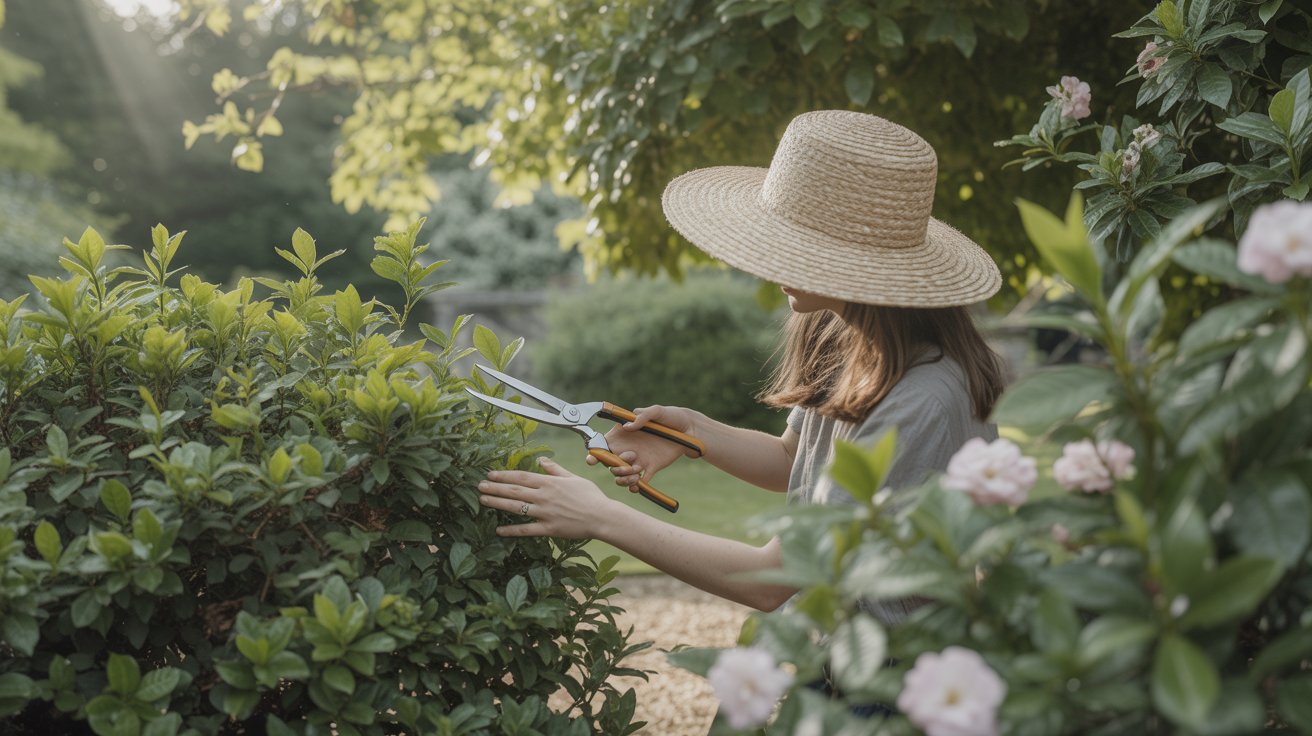
Disinfect tools between cuts if disease is suspected.
This step alone often transforms a shrub.
Step 4: Improve Shape Gradually
Shrubs look most natural when they are:
- Slightly wider at the bottom
- Narrower at the top
This allows sunlight to reach lower branches.
Avoid:
- Tight shearing into perfect balls
- Flat tops
- Severe boxy cuts (unless stylistically intentional)
Soft shaping preserves the romantic garden feel.
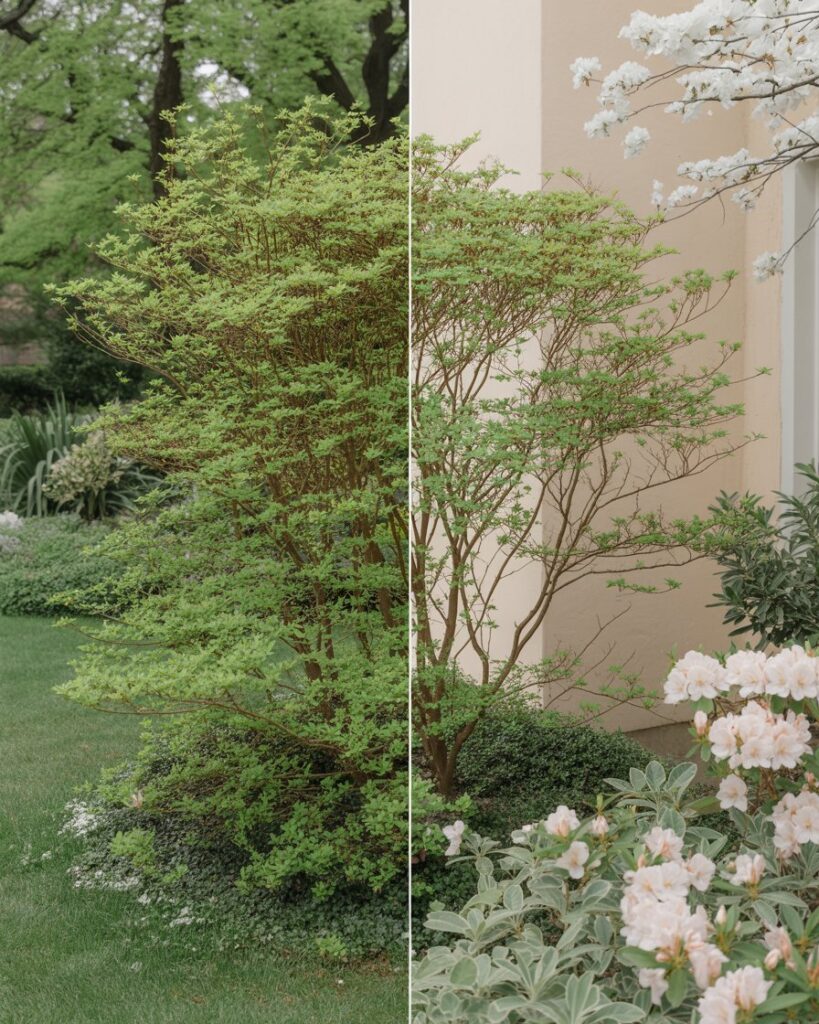
Step 5: When Hard Pruning Is Safe
Some shrubs tolerate a drastic cutback (called rejuvenation pruning).
For example:
- Spiraea
- Potentilla
These can often be cut back to 6–12 inches in early spring and will regrow vigorously.
But always confirm your specific plant first.
Step 6: Feed and Support Recovery
After pruning:
- Add compost around the base
- Apply mulch (but don’t pile against stems)
- Water deeply
- Skip heavy fertilizer for a few weeks
Think of it as post-surgery recovery. Gentle care encourages strong regrowth.
Signs Your Shrub Is Recovering Well
✔ Fresh green shoots from the base
✔ Balanced shape filling in
✔ Healthy leaf color
✔ Increased airflow
If growth is sparse, give it a full season before making additional cuts.
Common Mistakes to Avoid
❌ Cutting everything at once
❌ Pruning at the wrong time of year
❌ Using dull tools
❌ Ignoring plant type
❌ Leaving stubs instead of clean cuts
Shrubs are resilient — but timing and patience matter.
Final Thoughts
Refreshing overgrown shrubs isn’t about perfection.
It’s about restoring light, airflow, and balance — so your garden feels intentional again instead of overwhelming.
The best part? Most shrubs want to thrive. With thoughtful pruning, they’ll reward you with healthier growth and fuller blooms next season.
Garden gently. Prune thoughtfully. And let your landscape breathe again.